
 Old growth trees too large for mills were left behind when Michael Riggs’ investment company logged 120 acres just east of the Yachats city limits and adjacent to the Siuslaw National Forest. (Quinton Smith/Lincoln Chronicle)
By GARRET JAROS/Lincoln Chronicle
YACHATS – A lengthy Yachats city council meeting Thursday covered a wide range of topics, from social media policy for employees to council goals for the coming year, but rising above everything was the issue of water.
Council received updates on efforts to protect its water supply by purchasing timberland in the Salmon Creek watershed along with a presentation by the city’s water supervisor highlighting conservation efforts and suggesting measures how to more equitably charge water users.
The roughly 300-acres comprised of two parcels in the Salmon Creek watershed on the south slope of Horizon Hill is known as the Riggs property. Salmon Creek, which flows down to the city’s water plant and Reedy Creek farther east, are Yachats main sources of water.
The headwaters of Salmon Creek and all of Reedy are in the Siuslaw National Forest.
 An aerial view in 2025 shows areas of the Riggs property north of Yachats River Road and above the city’s water treatment plant that were clearcut between 2011 and 2014. (City of Yachats)
Clearcutting on portions of the Riggs property between 2011 and 2014 sent sediment into Salmon Creek, forcing the city to shut down its water intake for more than a year. The acreage was never replanted and during heavy rains can still overwhelm the creek with sediment.
The city’s 2021 drinking water protection plan recommended acquiring the land to protect the watershed. But contacting and opening a line of communication with the owner of the two parcels — Ocean View Investment and Yachats Investments — has not been easy.
Mayor Craig Berdie credited deputy city recorder Neal Morphis, who also wears the hat of infrastructure clerk, for finally getting ahold of their owner.
“People for years have been trying to get hold of them,” Berdie told the Lincoln Chronicle during a break in the council’s 3½ hour meeting. “So the fact that we have contact is really positive.”
 Drew Tracy, left, talks with Craig Berdie during a 2023 tour of the Riggs property on Horizon Hill, which was clearcut from 2011-14 and not replanted and is adjacent to two of Yachats water sources. (Lincoln Chronicle file photo)
Morphis told the council the city now has an agreement to have the property inspected and assessed and that the city received a $70,000 grant to pay for those studies. The city will enlist the help of land conservation group McKenzie River Trust to help guide that work.
McKenzie River Trust will help oversee a timber cruise to evaluate the trees remaining on the site, appraise the value and condition of the land, and review the deed and a forest stewardship plan prepared by a consultant.
The grant comes from a partnership between Business Oregon, the Oregon Department of Environmental Quality and the Oregon Health Authority. The city also qualified for a technical assistance grant from the U.S. Environmental Protection Agency.
“By doing these tasks and doing the (land study), we’ll potentially qualify for other grants and forgivable loans that would help us actually purchase the property,” Morphis told the council. “So we might even be able to only pay for half the cost.”
The owner has not indicated a sale price, Morphis told the Chronicle, and although Lincoln County has a forestland appraisal, there is no guarantee the two will match.
Morphis showed the council aerial photographs of the property before and after the clearcutting and said if the city were able to implement a forest stewardship plan and improve the land, more water could be retained later into the summer.
Morphis said the city hopes to see contracts signed in the next couple of months so contractors can be hired and the work can proceed.
McKenzie River Trust also offers what is called a “bridge loan,” Morphis said, so if the owner wants to sell quickly the organization can step in to purchase the property while the city seeks grants to then buy it.
While much of the land in question has been clearcut there are still “good sized” portions that are heavily timbered but difficult to harvest because of the hillside’s contours, Berdie told the Chronicle.
The company racked up about $74,000 in state fines, Berdie said, because of planning and clearcutting issues. Abandoned logging equipment was removed by the Forest Service three years ago.
If the city is able to purchase the property, Berdie said, whether and how to reforest it will be depend on the consultant’s recommendation. There is also the possibility of establishing a park and trail system, he said.
Water conservation and rates
The council also heard a multi-part presentation by water supervisor Rick McClung about water supply challenges, infrastructure and conservation measures.
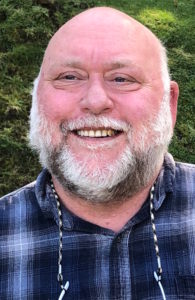 McClung
 talked about the city’s efforts to conserve water and the need to move to tiered rates for different users that would tie bills to the amount of water customers use.
While the city has a contract with Southwest Lincoln County People’s Utility District for water during emergencies or drought, McClung said conservation is a necessity for the city to secure grants – because grantees score and rank applications in part by conservation actions.
“And we’ve had to say – not much,” McClung said. “We have a plan. We have a concept of a plan. We have it all, but we need to activate it. And we’ve started doing that.”
Yachats needs a comprehensive, long-term approach to water management that combines customer conservation, reducing system water loss, appropriate rate structures, infrastructure investment, and development of additional supply options.
“Everybody seems to know the homeowner’s side of water conservation,” McClung told the council. “But the city has an obligation, too, to conserve water. And our way of conserving water is fixing our leaks. Because little leaks go a long ways. You’ll often see in our reports, we lose 200,000 to 400,000 gallons a month in our water system.”
And when it comes to percentages in the city’s water loss, a one gallon a minute leak is almost 1 percent, he said, which means the city has about 15 percent water loss. And with 14 miles of pipe, a thousand connections, and each connection having about 20 pieces, that is thousands of possibilities for leaks.
A survey of the city’s distribution system by a leak detection company identified numerous small to significant leaks, McClung said, and city crews have been systematically repairing them.
Tiered rates
McClung said the city should also address the issue of tiered water rates.
“One of the proven best ways for municipalities to conserve water with its customers is tiered rates,” he said. “We’ve talked about tiered rates for several years now. And we’ve been reluctant, trying to find other ways to do it and we did. But I think we’ve extinguished all those, and we’re down to trying to give tiered rates a chance.”
McClung has been talking about tiered rates with the city’s Finance and Public Works & Streets committees.
He told councilors that 16 customers, mostly hotels and restaurants, use 50 percent of the city’s water but only provide 21 percent of water revenue. The discrepancy comes down to the base rate paid for amounts used, he said.
“I think that’s something that we need to address,” McClung said. “I don’t want to freak out the big users, because we do have a love-hate relationship with them. Because I know the city needs them, we need each other. They need utilities so they can run their business. And we have a food and beverage tax and lodging tax.”
Previous councils have discussed changing the base rates for the largest users, but have been met with pushback from motel owners or managers, who say their operations provide much of the city’s operating funds through lodging taxes – and thus keeps the city’s property taxes abnormally low.
McClung said he will bring a water rate tier proposal to the council in a couple months for review with background information designed to be both fair and equitable for both homeowners and businesses.
Councilors, picking up on what McClung had said about a conservation group’s efforts to distribute low-flow shower heads, wondered if that could expand to outfitting hotels, and perhaps include dual-flush toilets.
McClung said a local hotel owner approached him several years ago about high water bills and implementing those types of conservation measures cut his bill in half.
“He’s a really good example of what can be done,” McClung said.
- Garret Jaros covers the communities of Yachats, Waldport, south Lincoln County and natural resources issues for Lincoln Chronicle and can be reached at [email protected]