

 Five people are seeking to take Position 1 on the Lincoln County Board of Commissioners from Casey Miller.
By the Lincoln Chronicle
It’s the most crowded field in the history of Lincoln County – six candidates – running for one position on the Board of Commissioners in the May 19 primary.
And that means the chances of someone winning outright with 50 percent of the vote is slim, even with an incumbent in the race. If that turns out to be the case, then the top two vote-getters go on to the November general election ballot with the winner then taking office in January 2027.
Here are the six candidates and their answers to five questions from the Lincoln Chronicle.
 Brubaker
Cheri Brubaker of Waldport has spent the last three years as a field representative for Rep. Val Hoyle, D-Ore. Before that she was a radio news director and covered local government as a reporter for Newport News Times. She holds a bachelor of arts degree from Columbia College and worked as a teacher. She moved to the Oregon coast in 2013 and in her campaign says affordable housing, the need for water and wastewater improvements and the budget shortfall are some of Lincoln County’s most pressing issues.
 Earls
Dru Earls of Lincoln City has worked in restaurants, management, hotels, labs, social work, healthcare and wastewater. He holds multiple degrees in food science from California State University/San Luis Obispo and a doctorate in cereal chemistry from Kansas State University. He does not have any prior government experience but worked in HIV/AIDS prevention for the state of Kansas. Earls was a union representative for SEIU 503 in Lincoln County and currently works at Chinook Winds Casino.
 McEntee
Carter McEntee of Newport is a manager in his family’s business, Mo’s Seafood and Chowder, and holds a master’s degree in business administration from Willamette University. He ran unsuccessfully for commission Position 1 in 2022 but has never held a position in government. He has advocated for cutting commissioner salaries and wants to make sure residents in north and south county feel represented.
 Miller
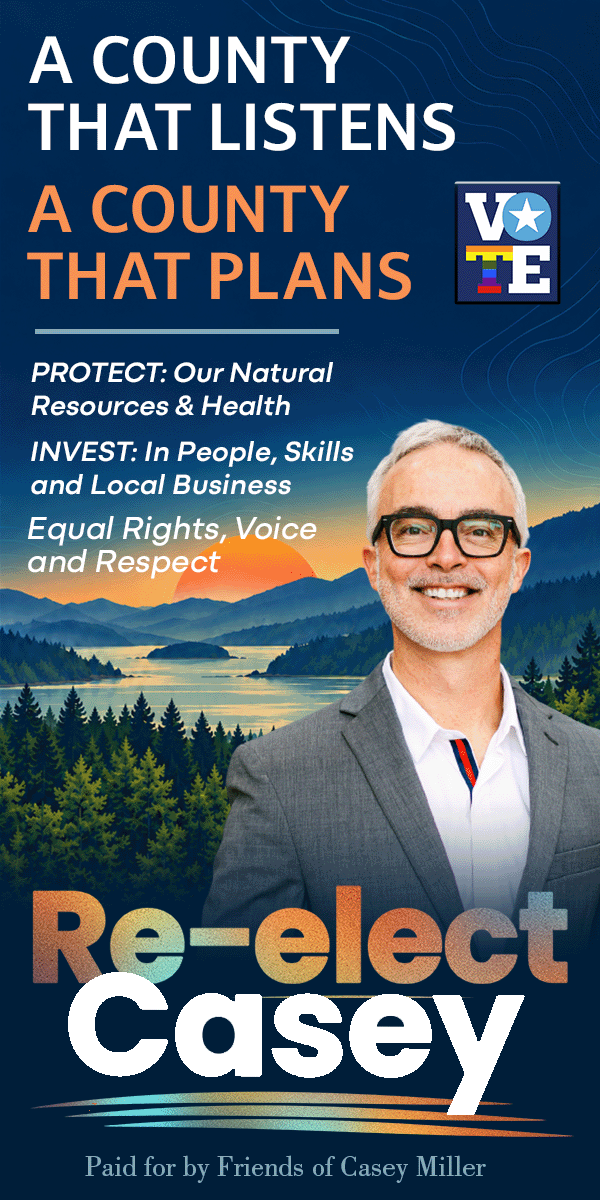
Casey Miller of Newport was elected to the commission in 2022, beating McEntee in the general election, and took office in 2023. Before that he was a public information officer for the county for 14 years. He studied psychology and English at the University of California, Davis. In his campaign, he has advocated for more open public processes. Although the position is nonpartisan, Miller has been open about his political affiliations on his website. He is a registered independent with several left-leaning values but believes being an independent allows him to work with everyone.
 Moody
Nicholle Moody of Depoe Bay has worked in social work and contracts management. She currently owns a property management and cab company. She has a bachelor’s degree in social work from San Diego State University and a masters of business administration from the University of Phoenix. Even though it is a nonpartisan position, Moody has addressed her political affiliations in her campaign, saying she is a registered Republican but describing her politics as a blend of conservatism and libertarian. She has been critical about how long it has taken commissioners to fill Claire Hall’s vacant seat, the shift to online board meetings and how Commissioner Walter Chuck chairs meetings. She does not have prior experience in government.
 Rigby
Cathie Rigby of Newport is the grants manager for the city of Newport and has over a decade of experience in municipal government working in juvenile probation, housing, and economic development. She holds a bachelor’s in political science in public policy from University of Utah. She is a member of the county’s fair board, a middle housing rulemaking committee, ODOT’s bike pedestrian advisory committee and universal accessibility advisory committee. She has not held an elected office. In her campaign, Rigby says she wants to support partnerships with nonprofits, building affordable workforce housing and build better transportation and accessible infrastructure.
 For the first time in its history, all three seats on the Lincoln County Board of Commissioners are up for election at the same time, including six people seeking Position 1. (Shayla Escudero/Lincoln Chronicle)
What do you see as the Board of Commissioners’ greatest challenge and how would you address it?
Rigby: I think the greatest challenge facing commissioners is restoring consistent, functional governance so the county can actually deliver for residents. Instability, unclear processes, and shifting expectations make it difficult for departments, community partners, and the public to know what direction we’re moving in. That erodes trust and slows progress on the issues that directly affect people’s daily lives.
If those immediate governance issues were not present, I believe the greatest long-term challenge would be navigating the serious financial strain the county is facing. The landscape of state and federal funding has become increasingly unpredictable, and counties cannot rely on what once were stable or recurring revenue sources. To continue delivering essential services and to expand the services residents are asking for we will need to become more proactive, more collaborative, and more strategic. In my current role as the city of Newport’s grants manager, I’ve had to pivot quickly to capitalize on every possible funding source, diversify revenue streams, and build strong partnerships so that projects have a higher likelihood for success. I would bring that same approach to the county. That means strengthening intergovernmental relationships, supporting departments in leveraging competitive funding, and prioritizing collaboration with community partners so we are not shouldering challenges alone.
Ultimately, the financial and governance challenges are connected. Stable leadership allows us to execute long-term plans, and sound financial strategy ensures those plans are achievable. My focus will be on rebuilding both, so that the county can move forward with clarity, accountability, and real capacity to solve problems.
Moody: The greatest challenge facing commissioners is a breakdown in productive leadership. Too much time is spent on internal conflict, procedural obstruction, and avoiding difficult conversations instead of delivering results for the people. This has created a culture where peers, department leaders, and the public feel silenced rather than heard. Public service requires engagement, transparency, and accountability. Policies should support good governance not be used to shut down discussion or avoid public scrutiny. When leadership prioritizes managing discomfort over solving problems, taxpayer trust erodes and real issues go unresolved. My approach is straightforward: listen to the people, reduce unnecessary regulatory barriers, stop over‑taxing working people, and allow farmers, fishermen, truckers, service workers, and small business owners to keep more of what they earn. Economic growth strengthens the tax base and funds essential services without increasing the burden on families.
Miller: The greatest challenge facing Lincoln County right now is restoring clear, transparent, and collaborative governance. County government is designed to function as a collective body. Under Oregon law, decisions should be made in public meetings where roles, responsibilities, and authority are clearly defined. When those processes become unclear or inconsistent, it creates confusion for our community and staff and reduces public trust. Over the past year, I have consistently raised questions about clarity in governance and the need for “board approved” policy, procedure and direction. The quality of the board’s direction impacts budgeting, staffing, public participation, and overall county operations. When decision-making is not consistently brought forward in a structured and transparent way, it can lead to fragmentation across departments and uncertainty about priorities.
McEntee: The biggest challenge is making sure we’re delivering essential services while being responsible with taxpayer dollars. Costs are rising, and it is easy for government to grow without stopping to ask if the spending actually makes sense. My approach is simple. Focus on the basics first. Public safety, roads, and core services should always come before new spending. We need to look closely at the budget, cut waste where it exists, and make sure every dollar is doing something real for the people in this county. Fiscal responsibility is not about cutting for the sake of it. It is about discipline, transparency, and using common sense. People here work hard for their money. They deserve leadership that treats it that way. At the end of the day, good government is not complicated. Spend wisely, focus on what matters, and be accountable to the people you serve.
Earls: Getting the Board of Commissioners to work for the residents of Lincoln County. Once that is accomplished by electing the best and most qualified people, then you can work on infrastructure, health care, education, low-income housing, replace the earthen dams, road repair, transportation, and environmental issues.
Brubaker: Lincoln County’s greatest challenge is restoring stable, accountable governance. Over the past year the board has operated without a permanent county administrator. In that vacuum, administrative authority has drifted in ways that have created confusion, conflict, and a loss of public trust. This concerns me deeply and it should concern every Lincoln County resident. The county is mid-stream on a $25-30 million Commons redevelopment project, one of the most significant capital investments in our recent history, without the stable administrative leadership that a project of that scale requires. Large capital commitments need consistent oversight, clear accountability, and someone in charge who is there every day. Right now that structure doesn’t exist.
I would address this by bringing what this moment requires — someone who is not coming to learn on the job. I spent three years as field representative for Congresswoman Val Hoyle, working directly with federal agencies, local governments, and community partners to help direct millions in federal dollars to Lincoln County communities. I covered this board as a journalist. I understand both how government functions when it works and what it looks like when it doesn’t. An immediate priority would be working with fellow commissioners to fill the administrator position with someone qualified and trusted and to clearly re-establish the board’s role in setting policy and direction. Commissioners lead. Staff execute. That distinction matters and restoring it is essential. Lincoln County deserves a board focused on the county’s future. I am committed to working across differences to get things done. That is not a slogan. It is how I have worked my entire career.
What experience do you have navigating conflict and how do you think that will prepare you for this role?
Moody: As a social worker, my role was to help clients and families reach resolution often while navigating very different perspectives on how problems should be addressed. That work required empathy, active listening, and the ability to build trust. People want to be heard and when they are, collaboration and problem‑solving become possible. As a contracts manager, my responsibility was to protect my employer’s interests while working collaboratively across departments to ensure compliance. By building strong, professional relationships with customers and partners, I was able to negotiate effectively and resolve conflict before it escalated. Across both roles, collaboration, accountability, and solutions‑focused leadership have been central to my work. It is in my nature to collaborate and solve problems.
Miller: I bring both professional experience and formal training in conflict resolution to this role. Before being elected, I spent 14 years working in the commissioners’ office as a public information officer. In that role, I regularly worked with community members, staff, and partner agencies to help address concerns and resolve issues. Often, the commission is the last place people turn when they feel unheard, so it requires both patience and structure to navigate those situations effectively.
I approach conflict by first clearly defining the issue. What is the concern, who is involved, and what outcome is being sought? From there, I focus on listening carefully, identifying shared interests, and working toward practical next steps. Not every issue requires board-level action, but every concern deserves to be understood and addressed appropriately. I’ve also completed formal mediation and conflict resolution training, which emphasizes listening, reframing, and structured problem-solving. In government, conflict is inevitable. It occurs between departments, within organizations, and in public settings. What matters is how it is handled. When community members and/or county staff do not respond, omit or withhold data it becomes very difficult to resolve conflict. My approach is to bring facts, behaviors and structure to the conversation. Discussions need to be focused on outcomes. Handled well, conflict can lead to better decisions and stronger relationships. My goal is to make sure that happens consistently and constructively.
McEntee: I have a lot of experience navigating conflict through both owning a business and managing a large team of nearly 100 employees during peak season. When you are responsible for that many people, conflict is not occasional, it is constant. Different personalities, high pressure situations, and competing priorities all have to be managed in a way that keeps things moving forward. What I have learned is that good leadership starts with listening. You have to understand where people are coming from, stay calm under pressure, and focus on solutions instead of emotions. Not everyone is going to agree, but you can still find common ground and make decisions that are fair and practical.
That experience translates directly to this role. The Board of Commissioners deals with tough decisions and differing opinions all the time. I am comfortable stepping into those situations, hearing all sides, and helping move toward a clear outcome. At the end of the day, it is about keeping people focused on the bigger picture and doing what is best for the community.
Earls: I have worked with thousands of people and the public during my 40 years in management. It has given me the tools to hand situations and deescalate situations and then get people motivated to work together to get the job accomplished.
Brubaker: Navigating conflict has been central to my entire career. As a journalist, I sat across from people who didn’t want their stories told and told them anyway — fairly, accurately, and without flinching. Good journalism requires holding your ground while maintaining relationships. You can’t do the work otherwise. As field representative for Congresswoman Val Hoyle, I worked daily across competing interests — federal agencies, local governments, special districts, and nonprofits. I resolved constituent issues with federal agencies and helped build the relationships that moved resources to the people who needed them. Getting things done in that environment meant listening carefully, finding common ground, and keeping the focus on outcomes rather than personalities. That is how federal dollars made their way to Lincoln County fire stations, affordable housing and workforce development. What prepares me most for this role is understanding that conflict is not the enemy. Unresolved conflict is. A commissioner’s job is not to avoid difficult conversations but to move through them toward decisions that serve the public. Lincoln County needs a board that can disagree productively and still get things done. That is the only kind of board that actually serves its residents.
Rigby: I have experience navigating conflict from my eight years as a paralegal, where resolving disputes and managing high pressure interactions was part of daily work. I also completed conflict-resolution training through two municipal government programs with Salt Lake City and with the city of Newport’s management programs. These experiences taught me to stay calm, listen carefully, and guide conversations toward productive solutions – skills that will help me support constructive, respectful decision-making in this role.
 Lincoln County District Attorney Jenna Wallace has used the public comment period at commission meetings to argue for filling open positions in her department due to a hiring freeze. (Shayla Escudero/Lincoln Chronicle).
In 2025-26 the county balanced a budget shortfall with a hiring freeze. What is your view of the county’s budget and hiring process and how involved should commissioners be with hiring freeze exceptions and budget priorities?
Miller: The 2025-26 budget used vacancy management and a hiring freeze to stay balanced. That was a necessary first step. However, how those decisions are made was also relevant. Prior to hiring its first administrator, the county brought department directors and elected officials together in multi-day budget work sessions to review priorities and work through tradeoffs collaboratively. Last year management team work sessions were not utilized. Departments and their positions may operate under different constraints, funding sources, and legal requirements. Work sessions ensure that collaborative and transparent budget decisions leverage the full expertise and buy in of executive leadership.
Commissioners are not typically needed in day-to-day hiring decisions, but they must set priorities, ensure transparency, and provide oversight. Decisions are better and trust is higher when they are informed by the full leadership team. I believe all elected officials and department directors should provide annual reporting, engage in budget work sessions and budget committee meetings; team participation in public meetings produces better decision-making, stronger coordination across departments, and improves public trust.
McEntee: The hiring freeze showed that the county is willing to make tough decisions when needed, and I think that is important. At the same time, it highlights the need for better long-term budgeting so we are not constantly reacting to shortfalls. I believe the budget process should be disciplined, transparent, and focused on core services first. Before adding positions or expanding programs, we need to make sure we are fully funding public safety, infrastructure, and the essential services people rely on every day. As for hiring freeze exceptions, commissioners should be involved at a policy level, not micromanaging individual hires. It is appropriate to step in when a request has a clear impact on public safety or critical operations, but those decisions should follow a consistent standard, not be made case by case based on pressure. The role of a commissioner is to set priorities, ensure accountability, and protect taxpayer dollars. If we stay focused on that, we can avoid situations where a hiring freeze becomes the only option.
Earls: Commissioners are responsible for the budget. A hiring freeze is short-term solution and you cannot spend money you do not have. A board member should be actively looking for solutions that will solve a budget shortfall that does not rely on a stopgap measure like a hiring freeze. The board needs to look at the budget and develop a long-term strategic plan that funds the budget — a combination of seeking more money from the state and federal level while restructuring the budget to limit the impact on services for the county residents.
Brubaker: The county’s hiring freeze was a necessary response to a real budget shortfall. I respect the fiscal discipline that required. But a hiring freeze is a short-term tool, not a long-term strategy. The human cost of leaving positions unfilled — to county services, to staff carrying impossible workloads, and to the residents who depend on those services — must be part of the calculation. My view is that commissioners set budget priorities and policy. They do not manage operations or make individual personnel decisions. That distinction matters enormously. Hiring freeze exceptions should move through a transparent process with clear, consistently applied criteria not through political pressure or personal relationships. The absence of a permanent county administrator has made that process murky. Restoring clear administrative leadership is inseparable from restoring a sound hiring process.
On budget priorities, commissioners should be deeply engaged — asking hard questions, understanding the fund structure, knowing where the money comes from and what happens if those sources shrink. I don’t come from a financial background, but I come with the discipline of a journalist and field representative for Congresswoman Val Hoyle who knows how to read documents, ask the right questions, and follow the money. I have a solid understanding of how congressional funding works — how to identify viable projects, position them for federal dollars, and move them through the pipeline. That knowledge is directly relevant to a county that depends heavily on federal and state grants to deliver services.
Rigby: In 2025-2026, the county balanced its budget shortfall with a hiring freeze, which highlights how important it is to evaluate budgets carefully each year based on community needs, legal obligations, and essential services. Some departments have limited flexibility – such as public safety, public health, emergency management, and core infrastructure – so cuts or freezes in those areas can have real impacts. Commissioners must be closely involved in setting overall budget priorities, but hiring-freeze exceptions need to be reviewed with both fiscal responsibility and operational reality in mind. I’ve worked in departments where understaffing created strain on remaining staff and ultimately led to higher costs, so evaluating exceptions thoughtfully is essential. A balanced approach ensures taxpayer dollars are used efficiently while protecting the people expected to carry out the county’s work.
Moody: The commissioners are the county’s executives and are responsible for budget shortfalls and staffing shortages. Despite continued spending, there has been little effort to grow the economy. Instead, the county and state prioritized sanctuary policies over accessing billions in federal funding—contributing directly to the shortfall. Since Covid, the county has doubled down on anti‑business policies. High taxes and over‑regulation deter investment, drive up costs, and stifle job creation. Construction costs have increased, while permitting can take up to a year, which further compounds our housing issues. The county’s financial health depends on working people and businesses, yet policies continue to burden them. The solution is clear: accept available federal funding, reform anti‑business policies, and stop treating the middle class as a revenue source of last resort. We do not need virtue signals we need responsible leadership focused on growing the economy and serving the people who pay the bills. With a stronger tax-base, we can eradicate the shortfall and fully staff county departments.
 Lincoln County administrator Tim Johnson and Sheriff Adam Shanks brief commissioners in February 2025 on the construction of a new animal shelter in Waldport — just a few weeks before Johnson’s resignation. (Quinton Smith/Lincoln Chronicle)
One of the main responsibilities of elected officials is to hire and oversee a chief executive officer, administrator, manager and/or superintendent to handle day-to-day operations. It’s been more than a year since the county had an administrator. How important do you think it is that that role be filled and what could you do as a commissioner to get it filled?
McEntee: It is very important that the administrator role is filled. The board sets direction, but the administrator is critical for carrying out that vision and managing day to day operations. When that position sits vacant, it puts more strain on staff and makes it harder to stay consistent and efficient.
As a commissioner, I would make filling that role a priority. That starts with being clear about what we are looking for, running a focused and timely hiring process, and making sure we attract someone with strong leadership and organizational experience. Just as important, the board needs to be aligned. Hiring an administrator should not drag on due to indecision or competing agendas. It takes clear communication, a defined timeline, and a commitment to getting it done. At the end of the day, good leadership means putting the right people in place and then letting them do their job. That is how you build a county government that runs effectively and serves people well.
Earls: I have not been privy to the information as to whether a county administrator is necessary. If and when I get elected and have access to that information, I can analyze that data and make an informed educated decision based on the facts.
Brubaker: Filling the county administrator position is an immediate priority. This is not optional. Commissioners oversee a $207 million budget, 523 employees, and capital projects of significant scale and complexity. That organization needs stable, professional administrative leadership and it needs it now. The position has been vacant for more than a year. I understand why recruitment has been difficult. The internal conflict that has played out publicly, the leadership instability, and the unclear lines of authority have made Lincoln County a hard sell to qualified candidates. Fixing that is part of filling the role. No serious administrator candidate will walk into an environment where it isn’t clear who is in charge or whether the board can function as a unit. That means the board’s first job is to get its own house in order — establish clear lines of authority, agree on a process, and present a unified front to candidates. In the interim, the county must be transparent with staff and the public about who holds administrative responsibility and under what mandate. Clarity is not a luxury. It is essential. As a commissioner I would bring to this search the same skills I brought to my work as a congressional field representative — building relationships, finding the right people, and making the case for why Lincoln County is worth their commitment. This county has extraordinary assets. The right administrator will see that.
Rigby: It is very important for the county to have a qualified administrator in place, and I’m encouraged that interviews are already underway. If the position is filled before the next commissioners take office, my role would be to support that individual so they can effectively carry out their responsibilities, which is essential to keeping county operations running smoothly. A county administrator provides organizational guidance, supports the board, manages day-to-day operations, and helps align countywide work with strategic goals. Having that role brings stability and consistency. As a commissioner, I would support a clear process, and ensure the position is filled by someone with the right experience and to help create the conditions for that person to succeed.
Moody: Filling the administrator position is important. The administrator is responsible for implanting policy, operations, managing department heads, and ensuring the county functions efficiently and effectively. Leaving this role unfilled for more than a year places undue stress on staff, blurs accountability and makes planning and coordination between departments more difficult. Without a qualified administrator, short and long‑term planning suffers, necessary decisions are delayed, and commissioners are pulled into operational matters outside their job description. As a commissioner, I would make filling this position a priority, ensuring the process is transparent, professional, and focused on experience rather than politics. That means clearly defined job descriptions and quantifiable expectations for performance. It also means collaboration and moving the interview process forward instead of allowing disagreement or dysfunction to stall decision making.
Miller: Approved in July 2021, Ordinance 517 delegated certain aspects of the board’s authority to a county administrator position. The ordinance states “shall no later than 24 months after adoption of these provisions, conduct the first thorough analysis of the roles, responsibilities, duties and effectiveness of this position.” The board has yet to complete that analysis, yet we are currently recruiting for the position. We are putting the cart before the horse.
My approach may include: Consider pausing recruitment for the administrator position or bringing on an administrator on an interim basis; confirm the current governance structure and chain of command in a public setting vetted by all executive leadership and the board together; review the ordinance publicly with all elected officials and department directors; establish performance and management goals and expectations; and then resume the recruitment process with clearly defined expectations and objectives on an interim or permanent basis. Filling the position is critically important because the administrator serves as the operational lead for the county, responsible for implementing board policy, coordinating departments, and managing day-to-day operations. Let’s be sure the position is set up to succeed by implementing best practices in performance management.
 Before Lincoln County commission meetings were moved online this winter, public comment rules were displayed by the sign-up sheet. (Shayla Escudero/Lincoln Chronicle)
How do you think the Board of Commissioners handles communicating and listening to constituents? What is your approach to handling instances of heated public comment or conflict?
Earls: My approach would be decorum. Everyone has a responsibility to conduct themselves in public that is socially acceptable. If you have one person that acts irresponsibly at a meeting they can be removed and business can continue. If you have multiple people who are acting in a manner that is not socially acceptable and makes commissioners or employees feel unsafe then the room should be cleared. People should not be expected to work in a hostile work environment; constituents can get their information to commissioners by e-mail and Zoom.
Brubaker: There is a history of conflict among commissioners, and there is a great deal of work to do to restore public trust in county government. That work begins with a commitment to decency and decorum — in how commissioners engage with each other, with staff, and with the residents who show up to be heard. Without that foundation nothing else works.
Public engagement is not a courtesy. It is a requirement of democratic governance. People have the right to be heard by the officials who make decisions that affect their lives. As a journalist I spent years listening to people tell their stories — at commission meetings, city halls, and in communities across Lincoln County. As field representative for Congresswoman Val Hoyle, I was the person constituents called when government wasn’t working for them. Listening was not part of my job. It was my job. I know how to handle heated public comment. I remain steady. I don’t take it personally. It is important to remember that anger directed at government is often grief — about something lost, something feared, something that didn’t work when it should have. People know when they’re being heard and when they’re being managed. They can tell the difference immediately. As commissioner I will hold regular constituent meetings across the county. I will answer my phone. I will show up. I will listen. And I will report back on what I heard and what I did about it.
Rigby: I believe commissioners should set clear, consistent rules of engagement so everyone has the opportunity to be heard and to participate in meaningful civic dialogue. My approach is to maintain a respectful environment where community members can express concerns without allowing the meeting to become disruptive. Any disruptions from individuals who are not at the microphone should result in a request to leave. Shouting, cheering or disruptive behavior is not tolerated, and any demeaning, insulting or foul language at the microphone should lead to the microphone being muted. After one warning, the speaker should be directed to submit their public comment in writing rather than continuing at the mic. Clear expectations protect everyone’s right to speak while ensuring meetings remain productive, respectful, and focused on community business.
Moody: Over the past several months, the Board of Commissioners has restricted public participation by refusing calls and public comment unless constituents pre‑registered 24 hours in advance or completed required paperwork. These restrictions escalated to barring taxpayers from attending meetings altogether, based on claims that some members of the public made commissioners feel unsafe. Taxpayers were excluded from meetings funded by their own tax dollars without due process, an opportunity to respond, or the ability to directly address the allegations made against them. In professional and governmental settings, established escalation protocols exist, including an expectation that concerns be addressed directly before drastic measures are taken.
This approach undermines the commission’s fundamental responsibility to listen to and engage with the public it serves. Constituents are not threatening; they are frustrated by an increasingly bloated bureaucracy and by policies that suppress public input. Limiting public participation just two months before an election while commissioners continue to earn $98,000 or more annually and critical leadership positions remain unfilled further damages public trust. When elected officials prioritize personal comfort over accountability, representative government is weakened. Public service requires emotional regulation, professionalism, and a commitment to transparency. It is reasonable to expect commissioners and county employees to uphold these standards in service to the taxpayers who fund their positions.
Miller: Public comment should always be a component of commission meetings. Public comment(s) can be an opportunity to show empathy and action when and where needed from the elected officials/public officials that serve the community. It is an opportunity to listen, respond and demonstrate receptivity and good faith. The board needs to review its current public comment rules and ensure that in person, virtual and written comments are all articulated in one comprehensive approved policy and procedure. When public comment becomes challenging or emotional, it’s important to maintain structure while still respecting the public’s right to be heard. Setting clear expectations, applying rules consistently, and focusing on the issue — not the individual — helps keep meetings productive.
I support regularly reviewing public comment procedures to ensure they are working as intended. In some cases, it may be appropriate to direct specific concerns into separate processes such as complaint or investigation pathways. Strong communities require both open dialogue and clear structure. My approach is to ensure that people feel heard, meetings remain functional, and the process is transparent and consistent. Finally, public comment should be an opportunity to demonstrate actionable follow-up. If constituents request clarification or more information the board should identify and reciprocate that it understands requests from the community.
McEntee: I think there is always room to improve when it comes to communication and listening. People want to feel heard and respected, even when they disagree with the outcome. That means being accessible, explaining decisions clearly, and following through. My approach is simple — be present, listen first, and be honest. You do not have to agree with every comment, but you do have to take people seriously and treat them with respect.
When it comes to heated public comment, I am comfortable in those situations. I manage large teams, and I have dealt with conflict in high pressure environments. The key is to stay calm, not take things personally, and keep the focus on solutions. Emotions can run high, but leadership means keeping the conversation productive and grounded. At the end of the day, people may not always like the decision, but they should always feel like they were heard and treated fairly. That is how you build trust over time.
To see or read the Lincoln County voter’s pamphlet statements of the six candidates, go here
To watch or see a Lincoln County League of Women Voters forum with the candidates, go here















In reading all of these responses, it is clear to me that Cheri Brubaker is the candidate you can trust for Position 1. She’s been working to make Lincoln County a better place for many years and she knows the issues, the people, and the work that needs to happen in Lincoln County. She is going to work with all parties to resolve the budget shortfall, restore public trust, and get Lincoln County on track again. Cheri has been endorsed by Congresswoman Val Hoyle and many others — she is the most qualified by far.
It’s important to think of all three positions as part of a collaborative team. Strengths that Lincoln County needs are sprinkled generously throughout the candidates. In my mind the ones that look most likely to set the county up for success are as follows:
Position 1: Despite a strong field, Carter McEntee looks to have the best grounding and experience necessary to facilitate forward motion based upon his ability to discern the order and importance of competing priorities.
Others might bring more direct governmental or quasi governmental experience, but McEntee appears to be the candidate who will help sort out details without distorting the big picture. That’s a must for this Commission.
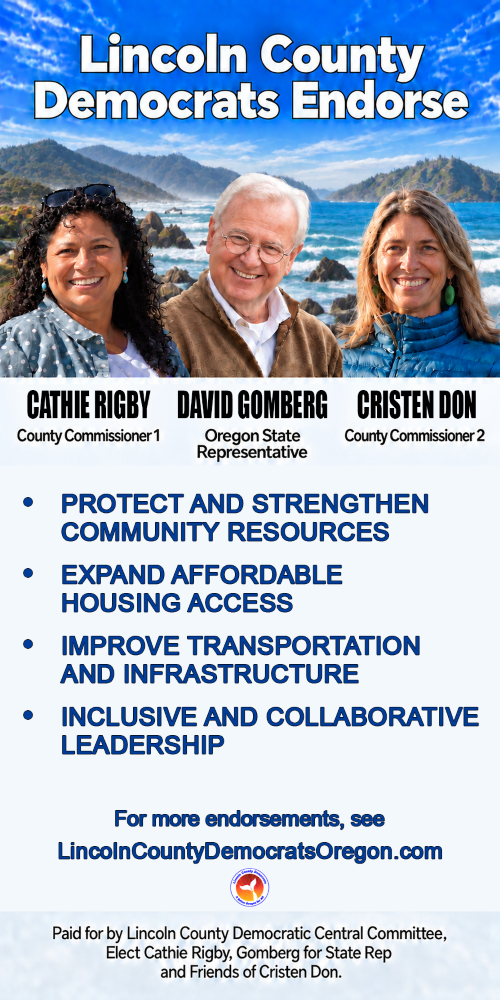
Position 2: Cristin Don has some excellent qualities and experiential strengths that are needed for the Lincoln County Commission. Reading her resume online was most impressive. Her vision and her ‘rubber meets the road’ organizational skills are a fine compliment to McEntee’s pragmatism and tested judgement.
Position 3: Curtis Landers is an instinctual problem solver and a people-oriented public servant who will complete the team with an exceptional understanding of our residents’ sensibilities. Through his decades of service, he has had the rare opportunity to develop a deep, granular level empathy for people at all levels of life, including those who are struggling and those who are powerful. Seeing Landers in action leads one to believe that his interest in serving all members of the county is sincere and his ability to do so is unquestionable.